Bambu Lab A1 mini vs EPAX DX Cure Pro
Side-by-side on the specs that matter, with category winners and an opinionated take to help you decide.
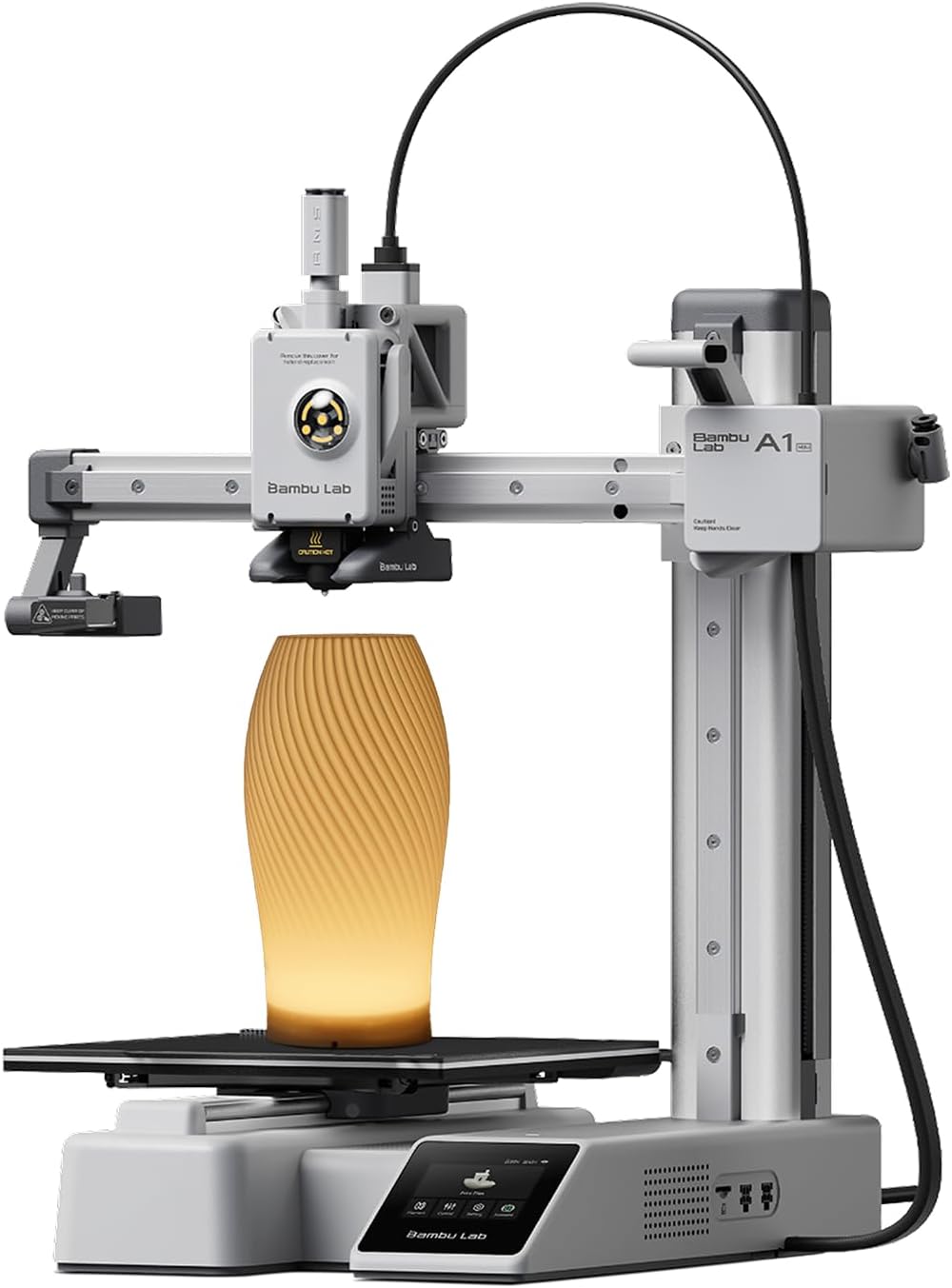

You're choosing between an accessible desktop 3D printer for plastic parts and a resin printer for highly detailed small objects.
Pick the Bambu Lab A1 mini if you want to easily print sturdy, colorful plastic models and functional prototypes at home.
Pick the EPAX DX Cure Pro if you need to create ultra-detailed miniatures, jewelry, or dental models with a smooth finish.
- —The A1 mini uses fused filament fabrication (FFF) for stronger, more durable parts, while the DX Cure Pro uses stereolithography (SLA) for finer detail and a smoother surface.
- —The A1 mini typically has a larger build volume for bigger projects, but the DX Cure Pro achieves much higher resolution for tiny features.
- —Resin printing with the DX Cure Pro involves handling messy liquid chemicals and post-processing, while the A1 mini uses clean, solid plastic spools.
Full specs
Ask anything — we'll answer with Bambu Lab A1 mini and EPAX DX Cure Pro in mind.
Pindear may earn a commission when you buy through these links. Winners are determined by numeric spec comparisons only; non-numeric features (app quality, ecosystem, real-world feel) are covered in the verdict.